Plain Talk 16Missing and Murdered Indigenous Women and Girls

Plain Talk 16 | Missing and Murdered Indigenous Women and Girls
Chapter 1
Missing and Murdered Indigenous Women and Girls
Most of us will never have to worry about where we will get our next meal, what we will do to get the money we need to live or where we will sleep. We don’t understand what it feels like to be consumed by fears about our physical safety and yet be too afraid to contact the police. On your own, easily forsaken.
Plain Talk 16 | Missing and Murdered Indigenous Women and Girls
The National Inquiry into Missing and Murdered Indigenous Women and Girls
There is an urgent need for the development of a First Nations-led National Action Plan to address violence against First Nations women, girls, and 2SLGBTQQIA+ people. In June 2019, the National Inquiry into Missing and Murdered Indigenous Women and Girls (National Inquiry) released its final report entitled Reclaiming Power and Place. The final report explores the many intersectional issues which contribute to the national tragedy of missing and murdered Indigenous women, girls and 2SLGBTQQIA+ people.
Plain Talk 16 | Missing and Murdered Indigenous Women and Girls
The final report also contains four overarching findings relating to rights recognition: culture as safety, health and wellness, human security, and justice. The final report’s 231 Calls for Justice include recommendations to governments, institutions, industries, service providers, partners, and to all Canadians (Breathing Life into the Calls for Justice: An Action Plan to End Violence Against First Nations Women, Girls, and 2SLGBTQQIA+ People, 2021).
Forsaken. That is the story of the missing and murdered women. On June 3, 2019, the Commissioners of the National Inquiry into Missing and Murdered Indigenous Women and Girls (MMIWG) released their final report entitled Reclaiming Power and Place. It explored the many issues that contribute to the crisis of missing and murdered Indigenous women and girls in Canada. It identified four overarching themes: Rights Recognition, Justice, Security, and Health and Wellness, all encompassed within the 231 Calls for Justice. This journey has been a long one.
Plain Talk 16 | Missing and Murdered Indigenous Women and Girls
Plain Talk 16 | Missing and Murdered Indigenous Women and Girls
The Statistics are Staggering
Women are the foundation of our communities. Our women carry the stories and the traditions of their family and nations. These reports shared the human stories of our sisters and their experiences. While we don’t want to diminish our women and girls to a set of statistics, it is important to use these statistics to raise awareness and advance concrete action to improve the lives of our women, our children, our communities.
Plain Talk 16 | Missing and Murdered Indigenous Women and Girls
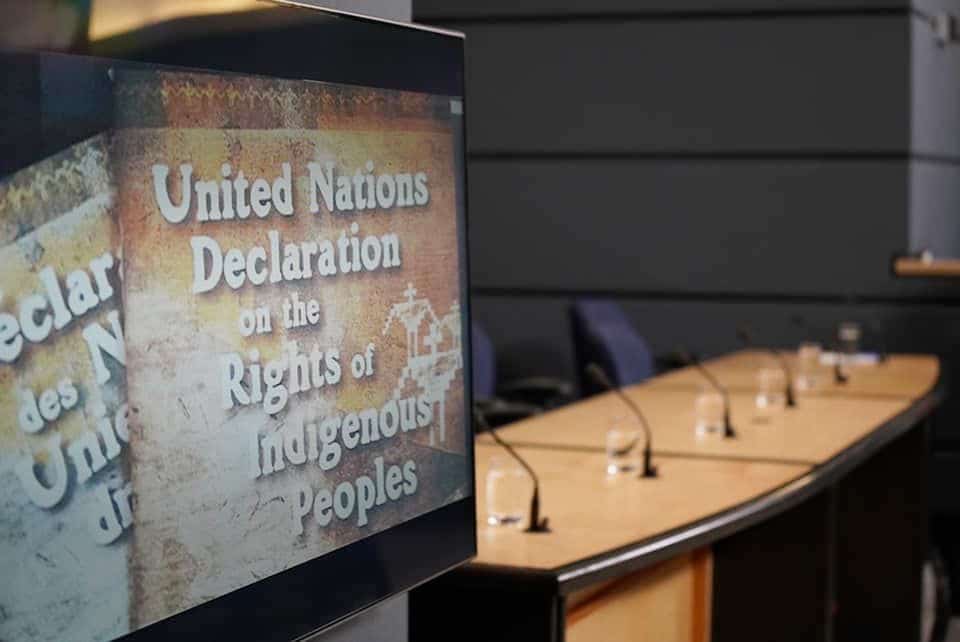
Violence against Indigenous women and girls has been referred to as an “epidemic” by United Nations Special Rapporteur on the Rights of Indigenous Peoples and as “genocide” by the National Inquiry. The National Inquiry (2019) in their final report states, “the common thread weaving these statistics together is the fact that violence against Indigenous women, girls, and 2SLGBTQQIA3 people is not an individual problem, or an issue only for certain communities. This violence is rooted in systemic factors like economic, social and political marginalization, as well as racism, discrimination, and misogyny” (p. 56).
In the 2021 Healing Path Forward document, the Assembly of First Nations calls on all political parties and candidates to endorse direct and targeted funding to address systemic discrimination against First Nations women and gender (Healing Path Forward, 2021).
Two-Spirit, Lesbian, Gay, Bisexual, Transgendered, Queer, Questioning, Intersex, Asexual.
Plain Talk 16 | Missing and Murdered Indigenous Women and Girls
The National Inquiry into Missing and Murdered Indigenous Women and Girls
There is an urgent need for the development of a First Nations-led National Action Plan to address violence against First Nations women, girls, and 2SLGBTQQIA+ people. In June 2019, the National Inquiry into Missing and Murdered Indigenous Women and Girls (National Inquiry) released its final report entitled Reclaiming Power and Place. The final report explores the many intersectional issues which contribute to the national tragedy of missing and murdered Indigenous women, girls and 2SLGBTQQIA+ people.
Plain Talk 16 | Missing and Murdered Indigenous Women and Girls
The Standing Committee on the Status of Women, 2009 reported that:
- Indigenous women were almost three times as likely as non- Indigenous womento self-report being the victim of a violent crime
- Most violent incidents against Indigenous women were not brought to the attention of police or any other formal victim service.
- Across Canada, the disproportionately high number of missing and murdered Aboriginal women is a distinct phenomenon that highlights Indigenous women’s vulnerability.
Plain Talk 16 | Missing and Murdered Indigenous Women and Girls
Forsaken: The Report of the Missing Women, 2012
This report was the product of the Commission of Inquiry into the missing and murdered women from the Downtown Eastside of the City of Vancouver between 1997 and 2002. The scope of the commission’s inquiry was limited to the investigations by police forces and to making recommendations for changes in the conduct and coordination of homicide investigations. However, the report deals extensively, and very powerfully, with the women—who they were, how they lived, how they died, how the pattern of predatory violence was clear, and how the police and general public mostly didn’t care.
National Inquiry into Missing and Murdered Indigenous Women and Girls
In December 2012, the Assembly of First Nations called once again for a national public inquiry. In a document entitled: Demanding Justice and Fulfilling Rights: A Strategy to End Violence Against Indigenous Women and Girls, the AFN states:
There is an immediate and pressing need to seek justice for Indigenous women and girls in Canada and ensure that they have the same opportunities to see the fulfillment of their rights, regardless of where they reside.
In 2013, all provincial premiers supported the call for a national inquiry and in September of 2016, the National Inquiry into Missing and Murdered Indigenous Women officially began.
Plain Talk 16 | Missing and Murdered Indigenous Women and Girls
“In June 2019, the final report Reclaiming Power and Place: The Final Report of the National Inquiry into Missing and Murdered Indigenous Women and Girls was published. The introduction to the Final Report reads,
Indigenous women, girls, and 2SLGBTQQIA people in Canada have been the targets of violence for far too long. This truth is undeniable. The fact that this National Inquiry is happening now doesn’t mean that Indigenous Peoples waited this long to speak up; it means it took this long for Canada to listen.
The National Inquiry identified the following four root causes of violence against Indigenous women and girls:
- Experiences of traumatic events and multigenerational and intergenerational trauma;
- Social and economic marginalization resulting in homelessness, food insecurity, poverty, barriers to education and employment, and unemployment;
- A lack of will from institutions and governments to enact real, meaningful change; and
- Ignoring the knowledge, experiences, and expertise of Indigenous women and girls.
Building on recommendations from previous reports, the National Inquiry identifies 231 Calls to Justice to end violence against Indigenous women and girls. Some of these include:
- Developing a National Action Plan;
- Increasing representation of Indigenous women in governance and leadership roles;
- Establishing community-based and trauma-informed programs;
- Access to healing programs, employment, and safe housing;
- Increasing representation of Indigenous women in police services;
- Standardized policies and procedures for investigating cases of MMIWG; and
- Implementing education and awareness campaigns about violence against Indigenous women and girls
Plain Talk 16 | Missing and Murdered Indigenous Women and Girls
National Action for Justice
This section is from the 2021 Breathing Life into Calls to Justice Report.
The history and legacy of colonialism in Canada permeates almost all aspects of Canadian law and the legal system. Many of the root causes of the epidemic of missing and murdered First Nations women and girls in Canada can be traced back to the assimilationist objectives which were codified in Canada’s law and policies. It is an undeniable truth that long standing systematic biases and racist views still held by Canadian society continue to deny First Nations women and girls fundamental rights to safety, security, and equal protection under the law.
First Nations people are continually over-policed, over-charged, and over-incarcerated in the justice system. It is a shameful fact that government officials have never, and in many cases still do not provide the same level of funding to First Nations for services on reserves as they do other populations. When First Nations women, girls and 2SLGBTQQIA+ people go missing, their families’ complaints are not taken seriously, their cases are not investigated properly, their families are not updated on their loved ones investigations, their cases are prematurely deemed accidents, and the perpetrators are not apprehended or punished in the same manner as when the victims are non-First Nations.
- Using physical descriptors instead of racial descriptors,
- Protocols for early intervention,
- Extended length of law enforcement placements,
- Engagement with community members increased training, and community orientations.
- Expand and legitimize community-based security models,
- Provide secure transportation options,
- Identify and provide early warning of risks,
Public education, - Leverage technology for safety
- Support for First Nations justice programs, particularly models grounded in traditional approaches to law and justice,
- Options for choosing between different approaches to justice proceedings, and
- Increased funding and training for 2SLGBTQQIA+ restorative justice programs
Plain Talk 16 | Missing and Murdered Indigenous Women and Girls
Plain Talk 16 | Missing and Murdered Indigenous Women and Girls
Grassroots Efforts
The history of federal interventions on First Nation issues has demonstrated that efficient and effective intervention strategies must be community based. There are many initiatives happening across Canada where First Nations are taking control of violence prevention in their communities, protecting their women and girls, and bringing awareness to violence against women including:
- Drag the Red! is an initiative that started in 2014 where volunteers search the Red River in Winnipeg, MB for missing or murdered Indigenous women as an effort to bring answers to families.
- SisterWatch Project was created in 2010 in response to strained relations between Indigenous women in Vancouver’s Downtown Eastside (DTES) and the Vancouver Police Department and the department’s failure to thoroughly or properly investigate cases of women in the DTES who went missing or were murdered.
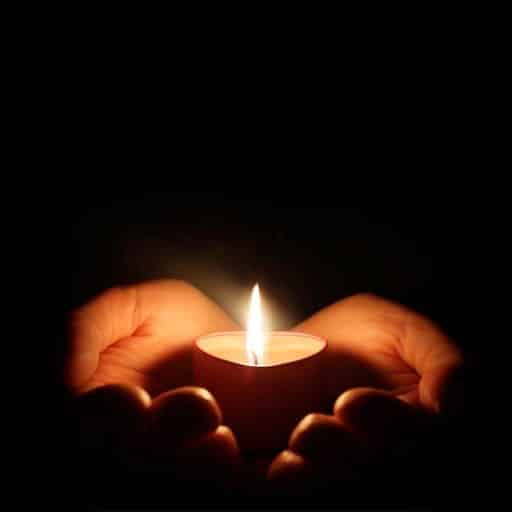
- Sisters In Spirit Vigils are held each year on October 4th to honour and commemorate the lives of missing and murdered Indigenous women and girls (MMIWG) and support families and loved ones of MMIWG.
- The REDress Project is an art installation project initiated in 2010 and based on an aesthetic response to this critical national issue. Red dresses have become a poignant and visible symbol of solidarity with our missing loved ones and their families.
- The Bear Clan Patrol was revived in 2015 as a volunteer initiative, grounded in Indigenous values and teachings, to keep the streets of Winnipeg safe.
Plain Talk 16 | Missing and Murdered Indigenous Women and Girls
Conclusion
The levels of violence against Indigenous women are a national disgrace. There is too much poverty, addiction, racism, lack of opportunity and there is still the intergenerational impact of residential schools.
The many reports to date on this issue have identified many common recommendations:
- Examining the entire spectrum of economic, social, political, cultural, and civil rights that are available to Indigenous women and girls in Canada and how those rights are respected
- Better inter-jurisdictional communication and coordination between emergency response and law enforcement organizations as well as between all levels of government
- Improving police treatment, response and investigation of incidences and reports of violence, disappearance, or murder of Indigenous women and girls
- Providing appropriate shelters, emergency interventions, and safe housing for women and children at risk of or experiencing violence
- Clear protections and safeguards for the most vulnerable, including sex trade workers and children in the child welfare system
As noted in the National Inquiry’s final report, First Nations women have the knowledge and solutions to ending violence at both individual and community levels. These women are not statistics. They are not unresolved case numbers, these women are daughters, granddaughters, wives, mothers, sisters, aunties and neighbours.
Plain Talk 16 | Missing and Murdered Indigenous Women and Girls