Plain Talk 11First Nations Control of First Nations Education
Chapter 1First Nations Control of First Nations Education
“In the past, the Canadian government’s education policy has been a tool of oppression, but it can be a tool of liberation founded on First Nation control over education. First Nations view education as a means to achieving self-determination and redressing the negative impacts of colonial practice.”
—First Nations Control of First Nations Education, 2010, pg. 4
Section 1
Transforming First Nations Education
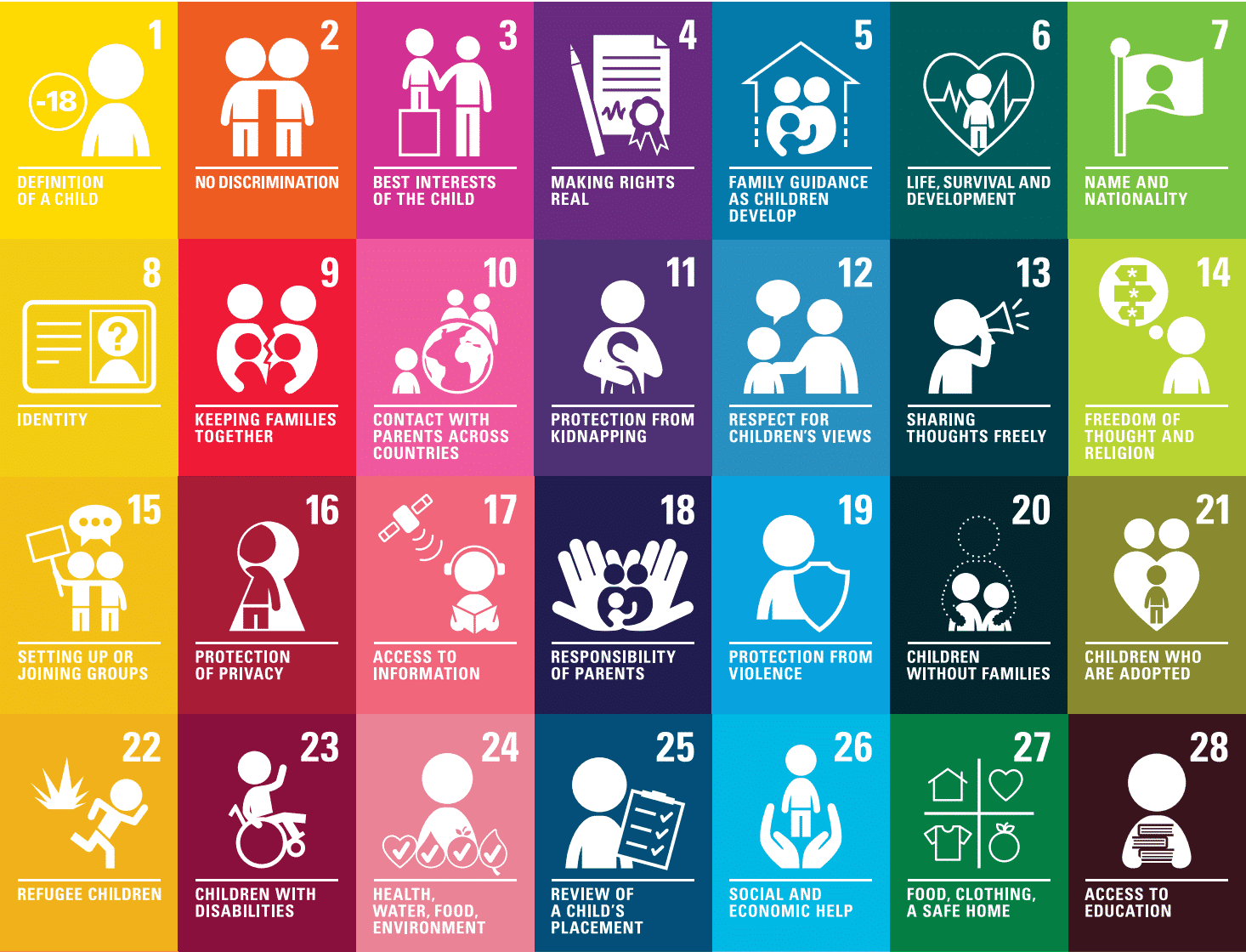
First Nations have the inherent and Treaty right not only to access education but to assert jurisdiction over education. The right to education appears in several international declarations related to the rights of Indigenous peoples, including the International Convention on the Elimination of all forms of Racial Discrimination (1965), the International Covenant on Economic, Social and Cultural Rights (1966), the Convention of the Rights of the Child (1989) and the United Nations Declaration of the Rights of Indigenous Peoples (2007). The Constitution of Canada (1982) also supports the provision of education, which is inclusive of post-secondary. These declarations specifically outline the right to an appropriate education in the context of lifelong learning for Indigenous peoples.
Plain Talk 11 | First Nations Control of First Nations Education
A Holistic Perspective
If education is a universal human right, there must be an understanding of what is meant by “education.”
ed·u·ca·tion
noun
- The process of receiving or giving systematic instruction, especially at a school or university.
- An enlightening experience.
Education is often defined in a narrow way, a formal act or process of acquiring general knowledge and developing the powers of reasoning and judgment in preparation for mature life, conducted under systematic mechanisms like schools, colleges, universities and other institutions. More recently education has been defined in a broader, and much more inclusive way, as a series of formal and informal experiences that transmit a society’s accumulated moral and spiritual values, skills, knowledge, attitudes over the course of a lifetime, from birth through to old age. This more broad and inclusive definition characterizes how First Nations define education, or lifelong learning.
Plain Talk 11 | First Nations Control of First Nations Education

First Nations lifelong learning is a process of nurturing First Nations learners in linguistically and culturally-enabling holistic learning environments that meet both the the individual and collective needs of First Nations. First Nations believe that all learners should have the opportunity to achieve their personal aspirations and goals within comprehensive lifelong learning systems.
Applying the First Nations Holistic Lifelong Learning Model, First Nations learning systems are characterized by:
- a foundation of First Nations cultures, languages, values, histories, and worldviews and the role of Elders;
- acquisition of Indigenous knowledge and wisdom from both First Nations and Western perspectives;
- learning as a continuous process that involves constant change, development and strengthening though all stages of our lives;
- learning activities that nurture emotional, physical, spiritual and intellectual dimensions;
- opportunities to reach full potential as healthy, productive members of peoples’ communities, working in occupations and professions of their choice;
- curricula and programs developed by First Nations, from early childhood through higher academic levels, career options and continuous learning opportunities.
Plain Talk 11 | First Nations Control of First Nations Education
First Nations Holistic Lifelong Learning Model
Tap on the image labels to learn more about each component
Plain Talk 11 | First Nations Control of First Nations Education
Indian Control of Indian Education
In 1972, the National Indian Brotherhood, now the Assembly of First Nations, adopted a seminal policy paper, Indian Control of Indian Education. The 1972 policy paper proposed that the Government of Canada and First Nations work together to put in place the financial and educational resources needed to enhance the success of First Nations learners through Indian Control of Indian Education. To support this policy, the document laid out the principles and values underlying First Nations learning, starting with a Statement of Values.
Plain Talk 11 | First Nations Control of First Nations Education
First Nations Control of First Nations Education
In 2010, the Assembly of First Nations updated the foundational 1972 policy to a modern reflection of First Nations Control of First Nations Education. This document was designed to “assist governments and First Nations communities in building the requisite policies, programs, services and systems to ensure the future prosperity of First Nations peoples in Canada,” and reasserts “First Nations inherent Aboriginal and Treaty rights to education.”
Plain Talk 11 | First Nations Control of First Nations Education
The First Nations Holistic Lifelong Learning Model (see Plain Talk 9 for more information) and the First Nations Control of First Education document calls for holistic learning systems that include:
- Programs and services grounded in First Nations languages, values, traditions and knowledge.
- Early learning programs and services that promote language and cultural immersion, school readiness and the holistic development of individuals.
- Curricula for both First Nations and non-First Nations, developed in conjunction with First Nations, that acknowledge the contribution, histories and cultures of First Nations and the impacts of colonialism on Indigenous peoples.
- The right and responsibility of First Nations to exercise free, prior and informed consent in all education decisions that affect First Nations citizens, regardless of place of residence or type of institution.
- Mechanisms to ensure that all First Nations learners, regardless of residency, have access to any school program or institute.
- Provisions that learning institutions acknowledge their responsibility to provide high quality, culturally and linguistically relevant learning opportunities and support for all First Nations learners enrolled in their learning institutions.
Plain Talk 11 | First Nations Control of First Nations Education
First Nations Education Transformation
As of 2016, with new investments in First Nations education from Prime Minister Trudeau and the Government of Canada, First Nations move closer and closer to First Nations control over First Nation education. The federal government announced historic investments in First Nations elementary and secondary education starting in 2016-17. The Federal Budget 2016 invested in $2.6 billion over five years for improving primary and secondary education for First Nations children, and $129.4 million over two years for supporting early learning and child care, and specifically:
- Funding to First Nations to support approximately 107,000 eligible students who are 4 to 21 years of age and who live in First Nation communities.
- Further funding to support language and culture programming in is available in First Nation schools to support language and culture.
- Following extensive engagements in 2016 and 2017 between First Nations and the federal government in 2016-2017, a transformed funding approach to elementary and secondary education was developed to provide more predictable and sustained funding for First Nations to strengthen First Nations control of First Nations education.
- Important outcomes of the transformative process include:
- Replacement of the federal government’s outdated, inefficient and inadequate proposal-based education programs with regional education approaches and funding models that provide more sufficient, predictable and sustainable funding.
- Support for First Nations to develop their own local, regional and/or Treaty based education models (called Regional Education Agreements – REAs) that identify the funding required to implement their vision of First Nations control over education from their local, regional and/or Treaty based perspectives.
- An example of a new, regional education agreement is the British Columbia Tripartite Education Agreement (BCTEA). The BC Tripartite Education Agreement: Supporting First Nation Student Success (BCTEA) sets the foundation for further growth and changes to support the growth of the BC First Nations education system. Those changes include new funding commitments, new First Nations education commitments from Canada and BC, Language and Culture funding for First Nation Schools, continuation of our Special Education Program, and important Nominal Roll changes. Read the entire agreement here. View other examples: Kee Tas Kee Now Regional Education Agreement
Maskwacîs Education Schools Commission (MESC)
Plain Talk 11 | First Nations Control of First Nations Education
Truth and Reconciliation Calls to Action
We call upon the Government of Canada to repeal Section 43 of the Criminal Code of Canada.
We call upon the federal government to develop with Aboriginal groups a joint strategy to eliminate educational and employment gaps between Aboriginal and non-Aboriginal Canadians.
We call upon the federal government to eliminate the discrepancy in federal education funding for First Nations children being educated on reserves and those First Nations children being educated off reserves.
We call upon the federal government to prepare and publish annual reports comparing funding for the education of First Nations children on and off reserves, as well as educational and income attainments of Aboriginal peoples in Canada compared with non-Aboriginal people.
We call on the federal government to draft new Aboriginal education legislation with the full participation and informed consent of Aboriginal peoples. The new legislation would include a commitment to sufficient funding and would incorporate the following principles:
- Providing sufficient funding to close identified educational achievement gaps within one generation.
- Improving education attainment levels and success rates.
- Developing culturally appropriate curricula.
- Protecting the right to Aboriginal languages, including the teaching of Aboriginal languages as credit courses.
- Enabling parental and community responsibility, control, and accountability, similar to what parents enjoy in public school systems.
- Enabling parents to fully participate in the education of their children.
- Respecting and honouring Treaty relationships.
We call upon the federal government to provide adequate funding to end the backlog of First Nations students seeking a post-secondary education.
We call upon the federal, provincial, territorial, and Aboriginal governments to develop culturally appropriate early childhood education programs for Aboriginal families.
Plain Talk 11 | First Nations Control of First Nations Education
United Nations Declaration on the Rights of Indigenous People
“Recognizing in particular the right of indigenous families and communities to retain shared responsibility for the upbringing, training, education and well-being of their children, consistent with the rights of the child.”
Article 14
- Indigenous peoples have the right to establish and control their educational systems and institutions providing education in their own languages, in a manner appropriate to their cultural methods of teaching and learning.
- Indigenous individuals, particularly children, have the right to all levels and forms of education of the State without discrimination.
- States shall, in conjunction with indigenous peoples, take effective measures, in order for indigenous individuals, particularly children, including 14 those living outside their communities, to have access, when possible, to an education in their own culture and provided in their own language.
Article 15
- Indigenous peoples have the right to the dignity and diversity of their cultures, traditions, histories and aspirations which shall be appropriately reflected in education and public information. 2. States shall take effective measures, in consultation and cooperation with the indigenous peoples concerned, to combat prejudice and eliminate discrimination and to promote tolerance, understanding and good relations among indigenous peoples and all other segments of society.
Article 17
- States shall in consultation and cooperation with indigenous peoples take specific measures to protect indigenous children from economic exploitation and from performing any work that is likely to be hazardous or to interfere with the child’s education, or to be harmful to the child’s health or physical, mental, spiritual, moral or social development, taking into account their special vulnerability and the importance of education for their empowerment.
Article 21
- Indigenous peoples have the right, without discrimination, to the improvement of their economic and social conditions, including, inter alia, in the areas of education, employment, vocational training and retraining, housing, sanitation, health and social security.
Plain Talk 11 | First Nations Control of First Nations Education
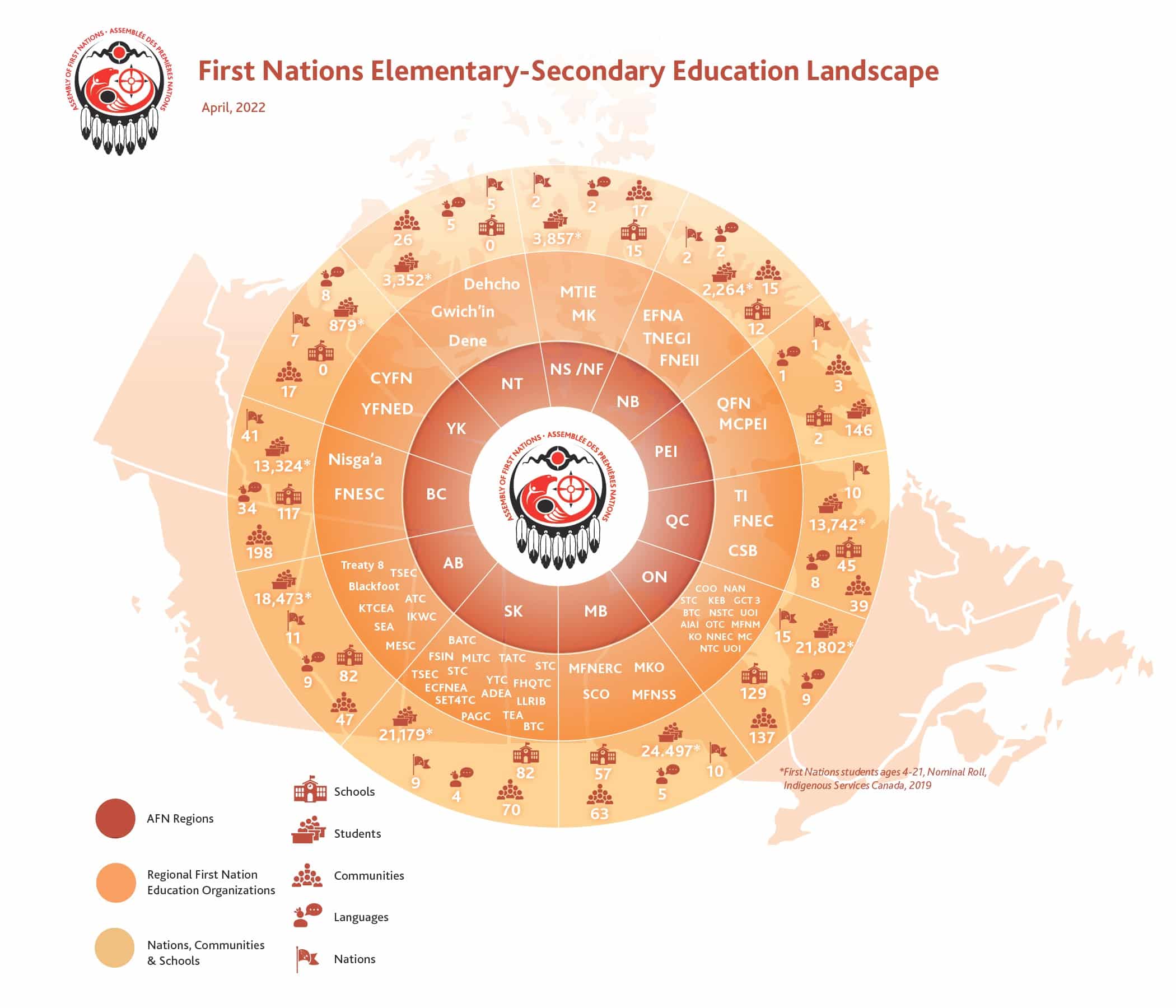
Diversity of First Nations Education in Canada
Like the diverse nature of First Nations across Canada, the development of First Nations learning systems are equally diverse.
Tap on the labels for more information:
Plain Talk 11 | First Nations Control of First Nations Education
Nova Scotia / Newfoundland
- Mamu Tshishkutamashutau Innu Education (Innu School Board) – https://www.innueducation.ca/schools.html
- Mi’kmaw Kina’matnewey (MK) – http://kinu.ca/
New Brunswick / Prince Edward Island
- Elsipogtog First Nation Education Authority (EFNA) – https://www.efnea.ca/
- First Nations Education Initiative Incorporated (FNEII) – http://fneii.ca/
- Mi’kmaq Confederacy of PEI – http://mcpei.ca/
- Qalipu First Nation (QFN) – https://qalipu.ca/
- Three Nations Education Group Initiative (TNEGI) – http://www.tnegi.org/
Quebec
- Cree School Board (CSB) – https://www.cscree.qc.ca/en/
- First Nations Education Council (FNEC) –
https://cepn-fnec.com/en/ - Institut Tshakapesh (IT) – https://www.tshakapesh.ca/
Ontario
- Anishinaabeg of Kabapikotawangag Resource Council
(AKRC) – https://www.akrc.on.ca/ - Association of Iroquois and Allied Indians (AIAI) –
https://www.aiai.on.ca/ - Bimose Tribal Council (BTC) –
http://www.bimose.ca/education
Plain Talk 11 | First Nations Control of First Nations Education
- Chiefs of Ontario (COO) – http://www.chiefs-of-ontario.org/
- Grand Council Treaty #3 – http://gct3.ca/
- Independent First Nations Alliance (IFNA) – https://ifna.ca/
- Keewaytinook Okimakanak (KO) – https://www.kochiefs.ca/
- Kinoomaadziwin Education Body (KEB) –
https://aes-keb.com/ - Mamaweswen—North Shore Tribal Council (NSTC) – https://mamaweswen.com/
- Matawa First Nations Management Inc. (MFNM) –
http://www.matawa.on.ca/ - Mushkegowuk Council (MC) – https://mushkegowuk.ca/
- Nishnawbe Aski Nation (NAN) – http://www.nan.on.ca/
- Nokiiwin Tribal Council (NTC) – http://www.nokiiwin.com/
- Northern Nishnawbe Education Council (NNEC) –
http://www.nnec.on.ca/ - Ogemawahj Tribal Council (OTC) –
https://www.ogemawahj.on.ca/ - Shibogama Tribal Council (STC) –
https://www.shibogama.on.ca/ - Union of Ontario Indians (UOI) – http://www.anishinabek.ca/
- United Chiefs and Councils of Mnidoo Mnising (UCCMM) – http://www.uccmm.ca/
- Windigo Tribal Council (WTC) – http://www.windigo.on.ca/
Manitoba
- Manitoba First Nation Education Resource Centre (MFNERC) – https://mfnerc.org/
- Manitoba First Nations School System (MFNSS) –
https://mfnerc.org/services/mfnss/ - Manitoba Keewatinowi Okimakanak (MKO) –
http://mkonation.com/ - Southern Chiefs Organization (SCO) – https://scoinc.mb.ca/
Saskatchewan
- Athabasca Denesuline Education Authority (ADEA) – https://www.adeask.ca/
- Battlefords Agency Tribal Chiefs (BATC) –
http://www.batc.ca/ - Battleford Tribal Council (BTC) –
https://brt6hc.ca/partners.html - East Central First Nations Education Authority (ECFNEA) – https://www.ecfnep.ca/
- Federation of Sovereign Indigenous Nations (FSIN) –
http://fsin.com/ - File Hills Qu’Appelle Tribal Council (FHQTC) –
http://fhqtc.com/ - Lac La Ronge Indian Band (LLRIB) – https://llrib.com/
Plain Talk 11 | First Nations Control of First Nations Education
- Meadow Lake Tribal Council (MLTC) –
https://www.mltc.net/ - Prince Albert Grand Council (PAGC) –
https://www.pagc.sk.ca/ - Saskatoon Tribal Council (STC) – https://www.sktc.sk.ca/
- South East Treaty 4 Tribal Council (SET4TC) –
https://ochapowace.com/ - Touchwood Agency Tribal Council (TATC) –
http://www.touchwoodagency.ca/ - Treaty Education Alliance (TEA) –
https://educationalliance.ca/ - Treaty Six Education Council (TSEC) –
https://www.tsec.ca/ - Yorkton Tribal Council (YTC) – https://www.ytccfs.com/
Alberta
- Athabasca Tribal Council (ATC) – https://www.atcfn.ca/
- Blackfoot Confederacy (Blackfoot) –
http://blackfootconfederacy.ca/ - Indigenous Knowledge & Wisdom Centre (IKWC) –
https://www.ikwc.org/ - Kee Tas Kee Now Tribal Council Education Authority
(KTCEA) – https://ktcea.ca/
- Maskwacîs Education School’s Commission (MESC) – https://www.maskwacised.ca/
- Sunchild Education Authority (SEA)
- Treaty 6 Education (Treaty 6) –
https://treaty6education.lskysd.ca/treaty6basics.html - Treaty 8 Education (Treaty 8) –
http://www.treaty8.ca/Education/
British Columbia
- First Nations Education Steering Committee (FNESC) – http://www.fnesc.ca/
- Nisga’a School District (Nisga’a) – https://www.nisgaa.bc.ca/
Yukon
- Council of Yukon First Nations (CYFN) – https://cyfn.ca/
- Yukon First Nation Education Directorate (YFNED) – https://www.yfned.ca/
Northwest Territories
- Dene Nation (Dene) – https://denenation.com/
- Dehcho Divisional Education Council (Dehcho) –
https://www.ddec.ca/ - Gwich’in Tribal Council (Gwich’in) –
https://gwichintribal.ca/